Choosing Corrugated Metal Pipe for Durable Infrastructure Projects
When I first started working on infrastructure projects in Indonesia, one of the materials I kept coming back to was corrugated metal pipe. It is not flashy, but it gets the job done in ways that concrete and other alternatives often cannot match. Over the years, I have specified and installed these pipes for everything from road construction drainage to bridge culverts, and I have learned a few things about what makes them work well and where they can fall short if you are not careful.
Corrugated metal pipe is essentially a steel pipe that has been formed with alternating ridges and grooves along its length. Those ridges are not just for show. They give the pipe a much higher load-bearing capacity than a smooth-walled pipe of the same wall thickness. That matters when you are burying the pipe under a road or embankment. The corrugation profile itself can vary depending on the manufacturer and the intended use. Some profiles are deeper and offer more stiffness, while others are shallower and allow for tighter bending radii in the field.
Why Galvanised Steel Matters
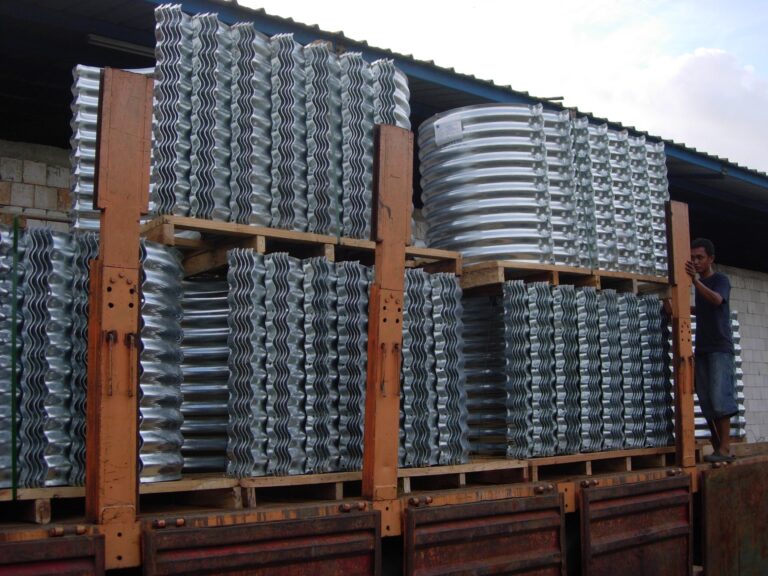
The key to long service life for corrugated metal pipe is the coating. Most of the pipes I work with are made from galvanised steel pipe. That means the steel coil is passed through a hot-dip galvanising process that bonds a layer of zinc to the surface. The zinc acts as a sacrificial layer, corroding before the steel underneath does. In many soil and water conditions, that gives you decades of reliable service. But you need to pay attention to the quality of the galvanising. A thin or uneven coating will fail early, especially in acidic soils or areas with high chloride levels.
In my experience, the best results come from pipes manufactured to a recognised standard. That is where SNI certification comes in. SNI is the Indonesian national standard, and it sets minimum requirements for material, dimensions, coating thickness, and testing. When I specify corrugated metal pipe for a project, I always look for the SNI mark. It is not just about compliance. It means the pipe has been tested for roundness, wall thickness, and coating adhesion. Without that, you are gambling with the integrity of your drainage system.
Real-World Applications: From Road Construction to Stormwater Management
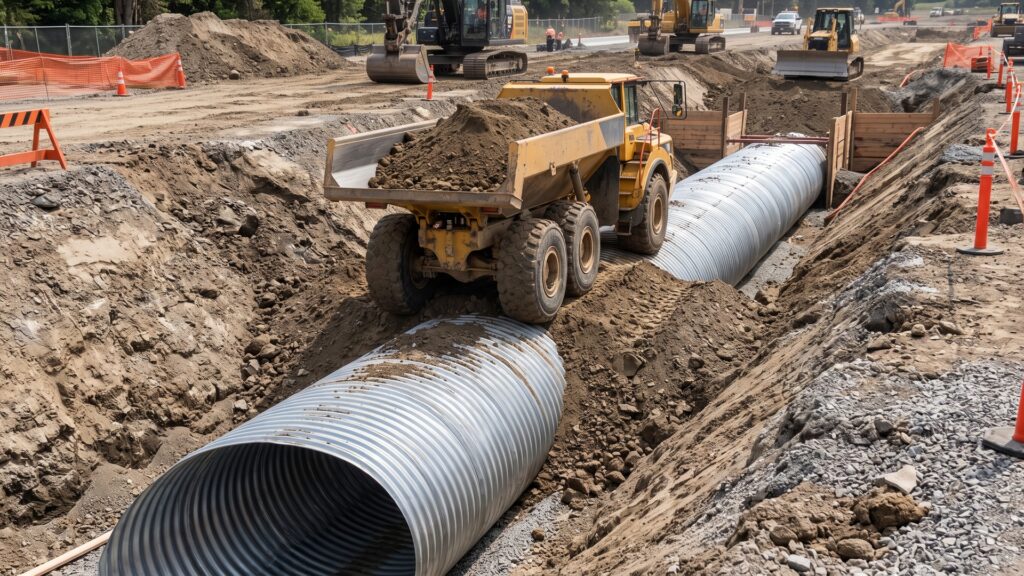
One of the most common uses for corrugated metal pipe is in road construction, specifically as a culvert or drainage pipe under the road surface. I have been on sites where the contractor tried to use a thinner pipe to save money, and within two years the pipe had collapsed under the weight of heavy trucks. That is a costly lesson. For bridge culverts and other load-bearing applications, you need a pipe diameter and wall thickness that match the expected traffic loads and soil cover. A good rule of thumb is to always go one step thicker than the minimum calculation suggests. The extra upfront cost is small compared to the cost of digging up a failed road to replace the pipe.
Stormwater management is another area where corrugated metal pipe shines. Its rigidity allows it to handle the hydraulic pressure of fast-moving water during heavy rain events. I have used it for detention systems and large-diameter outfall pipes. The pipe diameter can range from a few hundred millimetres for small drains to over three metres for major stormwater channels. The ability to join sections easily with coupling bands makes installation faster than concrete pipe, which requires heavy equipment and careful handling to avoid cracking.
Local Manufacturing and Quality Control
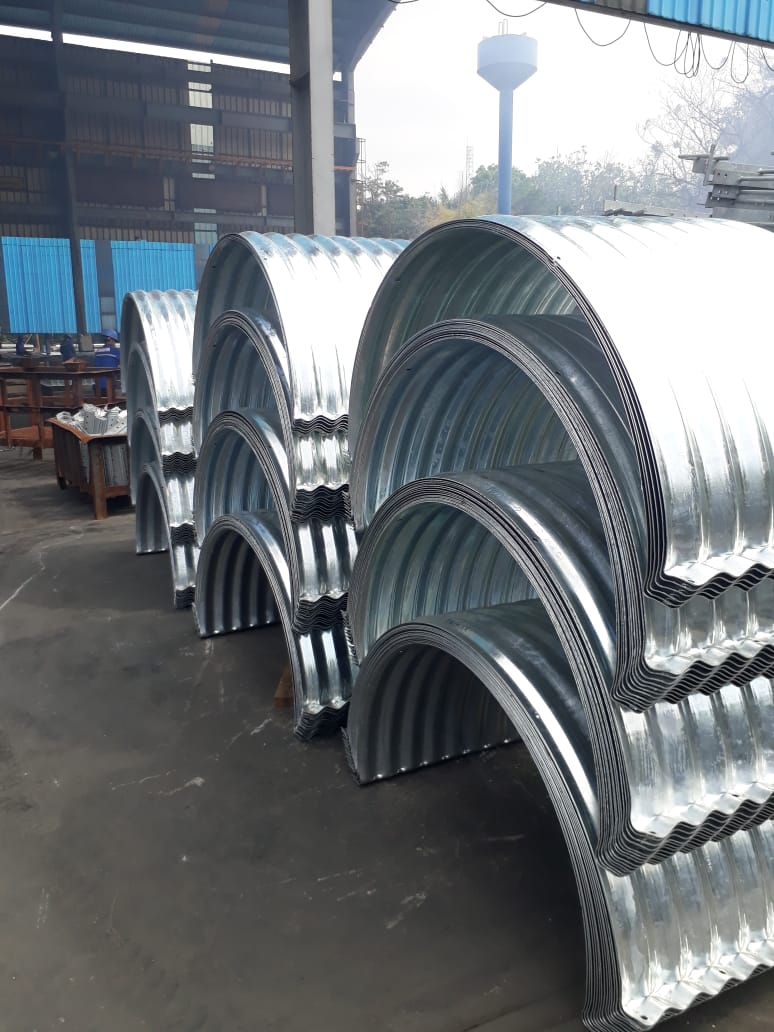
One thing that has improved significantly in recent years is the availability of locally made corrugated metal pipe that meets international standards. I have visited the fabrication plant of PT Primari Inrahm Utama in Bekasi, and I can tell you that seeing the process firsthand gives you confidence in the product. They start with steel coil, unroll it, and feed it through a corrugating machine that forms the profile. Then the pipe is cut to length and the ends are prepared for joining. The key step is the hot-dip galvanising, which is done after forming to ensure full coverage inside and out. A galvanised steel pipe that is dipped after corrugation will have better protection than one that is formed from pre-galvanised sheet, because the forming process can crack the zinc coating at the bends.
Another important factor is TKDN certification. TKDN stands for Tingkat Komponen Dalam Negeri, or the level of domestic content. For infrastructure projects that receive government funding, there is often a requirement for a minimum TKDN percentage. Using pipe from a local manufacturer like PT Primari Inrahm Utama not only supports local industry but also helps meet those procurement rules. I have seen projects delayed because the contractor imported pipe that did not meet the TKDN threshold. Sticking with local suppliers who can provide the necessary certificates simplifies the whole process.
Installation Tips from the Field
Even the best corrugated metal pipe will fail if it is not installed properly. The installation trench needs to be dug wide enough to allow for proper bedding. I have seen pipes crushed because the trench was too narrow and the backfill was not compacted around the sides. The pipe needs to be supported along its full length, not just at the joints. A good practice is to use a granular bedding material, like sand or fine gravel, and compact it in layers. The backfill should be placed evenly on both sides of the pipe to avoid shifting it out of alignment.
Another detail that often gets overlooked is the connection between pipe sections. Coupling bands must be tightened to the manufacturer's specification. If they are too loose, water can leak through the joints and wash away the bedding material. If they are too tight, you can damage the pipe ends. I always tell the crew to use a torque wrench for the final tightening. It takes a little longer, but it prevents problems later.
Comparing Corrugated Metal Pipe to Alternatives
There are situations where concrete pipe or smooth-walled plastic pipe might be a better choice. For example, in highly corrosive environments, such as near the coast or in industrial areas with chemical runoff, concrete or plastic may last longer than galvanised steel. But for most inland drainage and culvert applications, corrugated metal pipe offers a better balance of strength, cost, and ease of installation. It is lighter than concrete, so it is easier to handle and transport. It does not require specialised welding equipment like some plastic pipes. And it is recyclable at the end of its life, which is an increasing concern for sustainability-minded clients.
I have also seen projects where the designer specified a smooth-walled pipe for hydraulic reasons, thinking that the corrugations would increase friction and slow the water flow. That is a valid concern, but the difference is often small enough that the structural benefits of corrugation outweigh the slight hydraulic loss. In many cases, you can compensate by increasing the pipe diameter slightly or by using a smoother lining if needed.
Final Thoughts on Specifying Corrugated Metal Pipe
At the end of the day, choosing the right pipe for your project comes down to understanding the specific conditions at the site. Soil type, water chemistry, traffic loads, and installation depth all play a role. I have learned to always ask for the manufacturer's test data and certifications, especially SNI and TKDN for projects in Indonesia. Having a reliable supplier like PT Primari Inrahm Utama, with a fabrication plant in Bekasi that produces certified gorong-gorong, makes the whole process smoother. They understand the local soil conditions and the typical challenges that come with road construction and stormwater management in the region.
If you are planning a new infrastructure project, take the time to visit the plant and see the pipe being made. Talk to the engineers about the corrugation profile and the hot-dip galvanising process. Get samples and check the wall thickness yourself. It is better to spend a little extra time upfront than to deal with a failed pipe in the middle of a rainy season. Corrugated metal pipe has been a workhorse of civil engineering for over a century, and when it is specified and installed correctly, it will perform reliably for decades.